

We conducted a study on the European beech seed crop in the Velebit to determine its connection with climate and its importance for wildlife nutrition. A high degree of seed importance was established, as well as variability, which is linked to climatic factors.
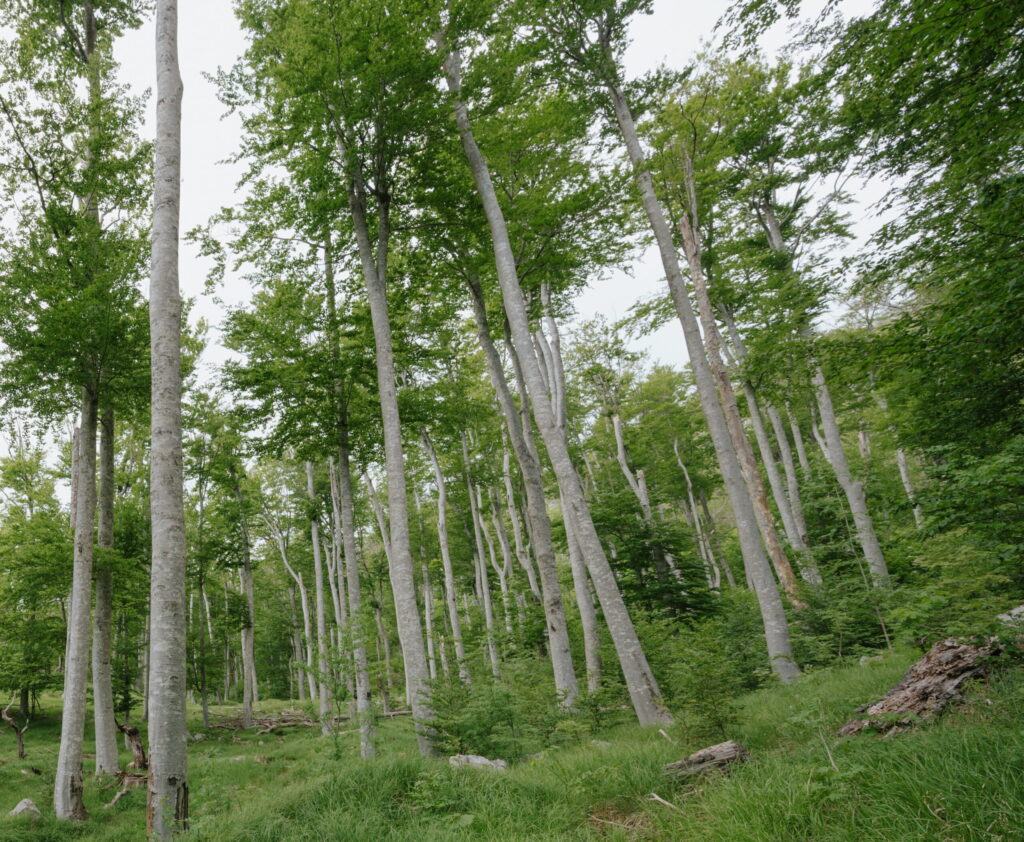

The European beech (Fagus sylvatica L.) is one of the most important forest species in the Velebit area, and its seeds represent a crucial food source for numerous species of forest fauna. We conducted a study aimed at analyzing the dynamics of the European beech seed crop in the Northern Velebit region over the 2016–2025 period, determining the relationship between the crop yield and climatic factors, and assessing the potential importance of beechnuts for the diet of large game.
Data on crop intensity and the amount of collected seed were analyzed in the selected European beech seed stand HR-FSY-SS-332/169. For the 2016–2023 period, data on monthly air temperatures and precipitation levels were also utilized. A total of 467.85 kg of beechnuts was collected during the study.
Every second year – a mast year
Mast years were recorded in 2016, 2018, 2020, and 2022, with the highest yield achieved in 2020 (220 kg). The yield showed marked interannual variability, characteristic of masting—a phenomenon where beech and other trees produce large quantities of fruit synchronously over a wide geographical area. A statistically significant negative correlation was found between the crop yield and the amount of precipitation in April of the crop year, as well as between the yield and the mean air temperature in July. At the same time, a moderately strong positive correlation was recorded between the yield and the average summer temperature of the preceding year, suggesting a potential influence of climatic conditions on flower bud formation.
Important food for bears, wild boars, red deer…
By extrapolating data from the 0.5 ha sample plot to the total area of beech forests in Velebit (45,963.2 ha), it was estimated that during the peak seed year, potential beechnut production could have reached approximately 20,224 metric tons. Such a quantity represents a significant seasonal source of high-calorie food for wild boar (Sus scrofa), brown bear (Ursus arctos), red deer (Cervus elaphus), and roe deer (Capreolus capreolus).
The results confirm the pronounced variability of European beech fruiting on Velebit and highlight the important role of climatic factors in shaping seed crops.
