

Almost 10% of the total amount of carbon dioxide sequestered annually in Croatian forests is stored in the Velebit mountains. It could be even more—it would be enough to change the economic management practices for thickets and shrubs, according to our expert associates.
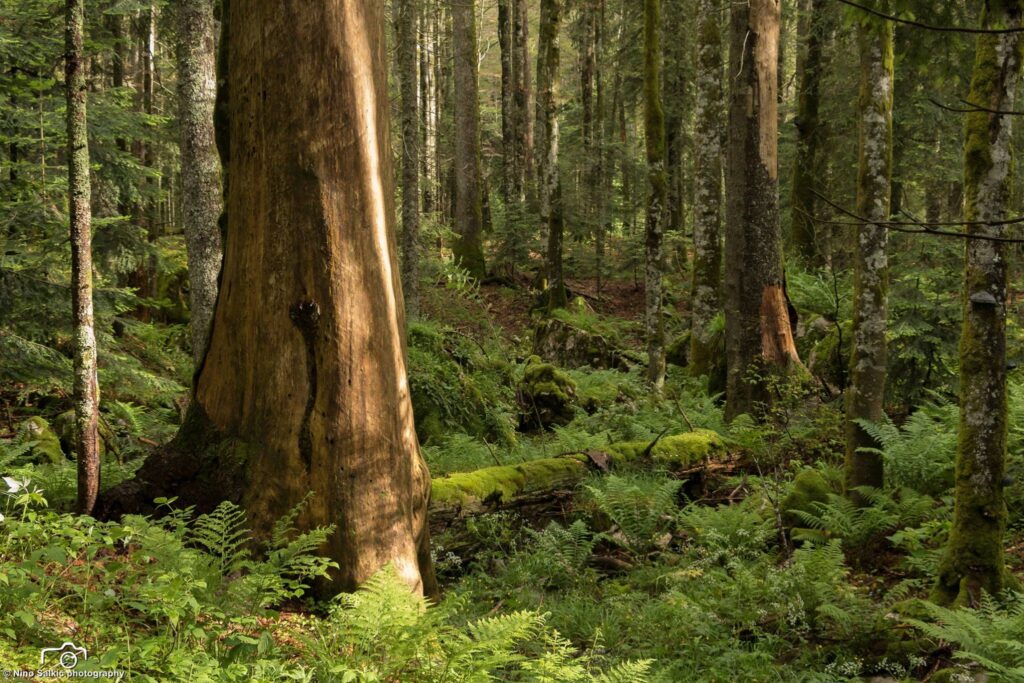

The Velebit massif is a unique zone where Croatia’s two biogeographical regions overlap. Its location and geomorphology make it invaluable to the biodiversity of the entire southeastern European region. Mountainous nature is not permanent, and because of its uniqueness, the Velebit area is extremely sensitive to one of the greatest threats facing humanity today—climate change. The Rewilding Velebit foundation team investigated what climate changes are occurring in the Velebit area and how pronounced they are. The purpose of the research was to analyze trends in climatic elements and indices and their deviation from reference time series. It revealed significant changes and fluctuations in air temperature and potential evapotranspiration. The goal is to find ways to manage Velebit’s forests to help mitigate the consequences of climate change in this area.
Temperatures rose above , the number of months with water shortages increased to two
Climate is the most important habitat factor. As plant life depends on weather and climate conditions, flora adapts to the climatic conditions of a specific area, but any change in these conditions can be drastic for all members of the forest ecosystem. By monitoring the climatic and hydrological elements collected at meteorological stations in the Lika area (Gospić, Gračac, and Zavižan), we calculated and analysed the trends of changes. The research showed that the average annual air temperatures for the period 2011–2023 increased statistically significantly compared to the reference series. This increase was from 1.0 to 1.4 °C. In addition, at lower altitudes, the number of months with a water deficit in the soil increased from one to two months. Although an increase in the amount of precipitation was recorded, the amount of potential evapotranspiration, which represents a certain loss of water from an ecosystem in the form of transpiration and evaporation, increased significantly.
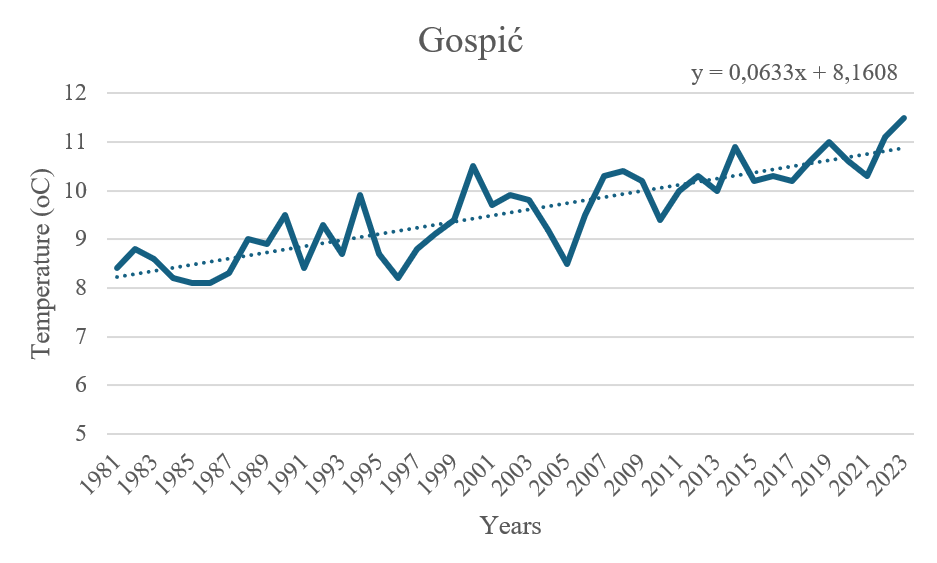
At first glance, a one-degree change doesn’t seem like much, but these numbers represent a multi-year average for an entire area, not a single summer day where the temperature is 32 °C instead of 31 °C. It’s better to communicate this on a global scale. Schleussner, C. et al. (2016) states that a 2 °C change worldwide reduces the availability of drinking water in the Mediterranean by 17%, extends heatwaves to 1.5 months, raises sea levels by 50 cm, and puts 98% of coral reefs at risk of dying. For the plant and animal life of Velebit, we can only guess what might happen with these calculated changes, but it’s certain that the flora and fauna will change over the next few decades as they try to adapt to the new conditions—or we’ll witness their failure to do so.
Fifteen megatons of carbon are stored in the forests of Velebit
Human impact on the climate is measured by the amount of carbon dioxide we release into the atmosphere, because of course CO2 acts as a greenhouse gas. Although it is not the most potent in terms of creating the greenhouse effect, it is the most significant and most widely emitted of all. Forest ecosystems are extremely important because, according to data from the FAO (Food and Agriculture Organization of the United Nations), they have four main roles in global climate change:
- If forests were to be cleared, degraded, or excessively logged, they would contribute to one-sixth of global carbon dioxide emissions
- They are highly sensitive to climate change, which is reflected in biodiversity and changes in the areas of forest ecosystems
- The production of biomass (wood) is a favorable alternative to fossil fuels
- If sustainably managed, forests have the potential to permanently store about one-tenth of global carbon dioxide emissions in biomass (sequestration), soil, and wood products
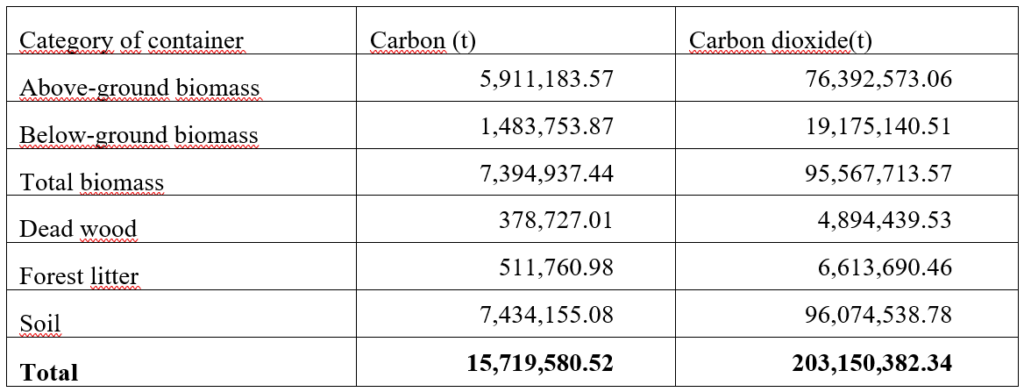
In our research, we calculated that in the managed forests of Velebit, which cover an area of about 112,000 hectares, 15 megatons of carbon are stored, mostly in biomass. Velebit becomes even more important in the context of continuous carbon sequestration. According to our estimates, more than 500 kilotons of carbon dioxide are sequestered annually, and the number is likely even higher. This figure represents almost 10% of the total annual amount of carbon dioxide stored in Croatian forests in 2022 (National Inventory Report 2024). Approximately 77.5 kilotons of carbon are removed from the biomass pool each year by logging in the managed forests of Velebit Nature Park. Of this, 45 kilotons return to the atmosphere within 2 years, but 119 kilotons are sequestered through natural forest growth.
Sequestration needs optimization
Additionally, areas covered with shrubland, thicket, and similar degraded forest stands provide the most profit on carbon markets compared to logging profits. These areas could be exempt from current forest management practices that treat them as a source of timber. In other words, these areas have the greatest potential to reduce the amount of carbon dioxide in the atmosphere if their management were repurposed for carbon sequestration.
Therefore, Velebit is not only important for its natural and cultural heritage but also for the better future it offers. It seems that significant changes will occur over the next few decades, primarily in the form of temperature increases. Natural heritage will become increasingly difficult to preserve, while at the same time becoming more important for mitigating these changes. This dual function also falls on our mountain, whose forests remove a significant amount of carbon dioxide from the atmosphere each year. In the context of managing these forests, optimising the sequestration function will become increasingly important. At the same time, further research and education are needed to help Velebit’s forests in their daily struggle for survival.
Text: Nikolas Keller
Expert advisor: Prof. Dr. Damir Ugarković