

The Emperor Fir tree is the largest common fir tree in Europe, standing at 42.5 meters tall with a circumference of 5.42 meters. Its health was deteriorating due to dry and rotten branches, while a parasitic plant threatened its long-term vitality. Sanitation work has been carried out to preserve it, ensuring its health for generations to come.
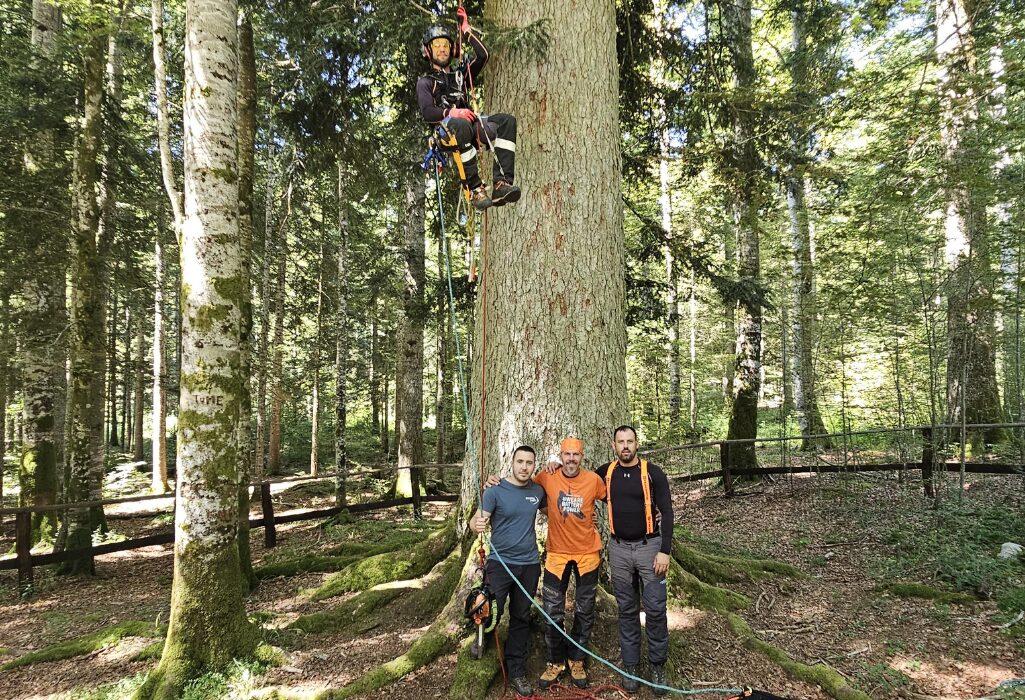
Do you know about the Emperor Fir? It’s the largest common fir tree (Abies alba) in Europe. It stands 42.5 meters tall, has a circumference of 5.42 meters, and is estimated to be over 500 years old! It’s located in the mountainous area of Bovan near Bakovac Kosinjski in the Municipality of Perušić.
To preserve this impressive tree for future generations, this week, in partnership with Velebit Nature Park, with the consent of Croatian Forests (Hrvatske šume), and in cooperation with Jana Nature Company, we carried out “sanitation” work.
The intervention was conducted for several reasons. The fir tree was in a compromised health state due to dry, rotten, and damaged branches that increased the risk of further decay and weakening of the tree, while also posing a danger to visitors, so they were removed. Mistletoe (Viscum album) parasitises the host tree and, in the long term, depletes its resources, reducing its vitality and resistance to other stressful and harmful factors. For these reasons, specimens of this parasite were also removed during this intervention.
Such timely interventions reduce the need for more invasive procedures in the future and allow for the natural development of the Emperor Fir, which, due to its biological and cultural value, holds exceptional natural, symbolic, and educational significance.
Interestingly, near the Emperor Fir, you can also find the Inscribed Stone, an epigraphic monument from the 1st century, and one of the first international arbitrations preserved in written form to this day. Inscribed Stone regulates the relations between two Japodian tribes, and the agreement was made with the arbitration of the Romans who controlled the Velebit area at that time.


