

Zavratnica Cove and the town of Jablanac have gained a new digital dimension – anyone can now check sea quality online in real-time, thanks to satellite imagery and AI-based analysis.
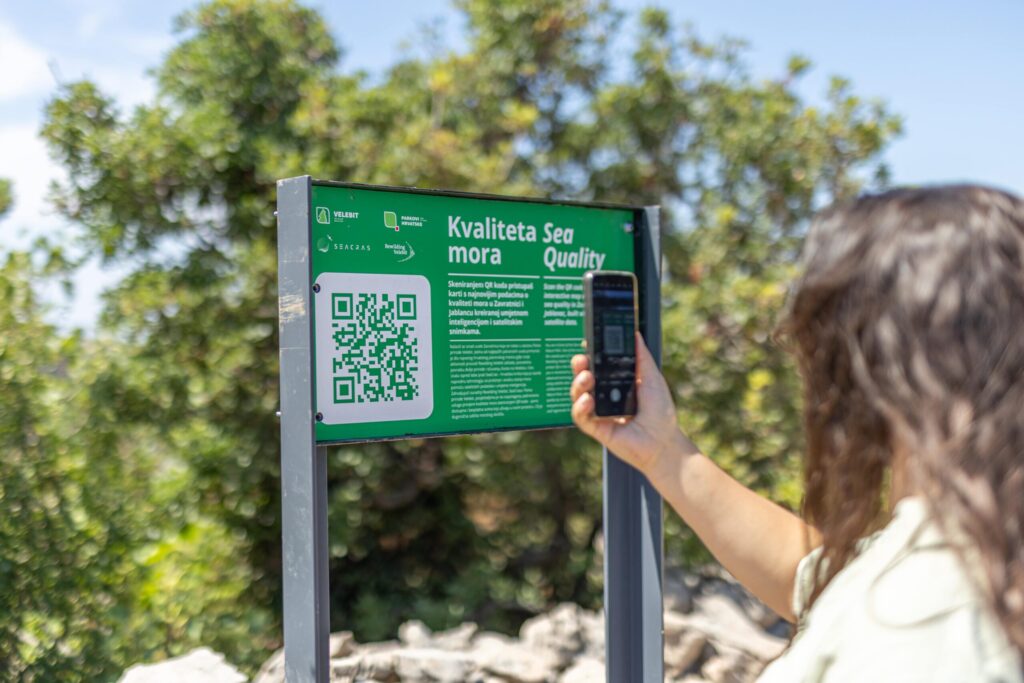
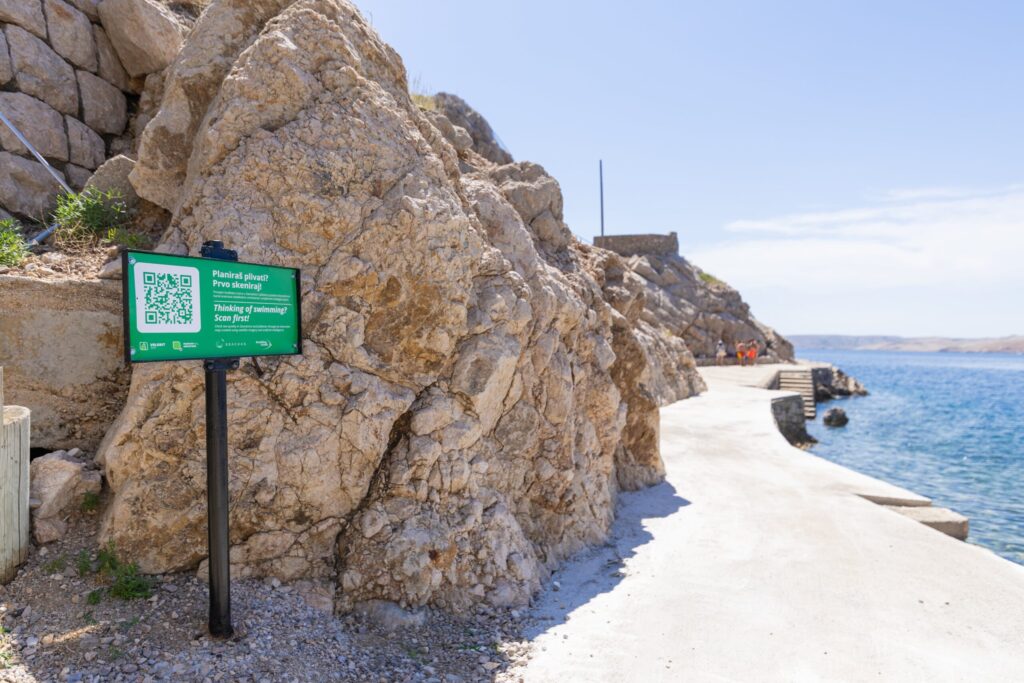
Discreet information boards have appeared near the protected Zavratnica Cove, at the foot of the Velebit Mountains, encompassing innovative technology. By scanning a QR code, every visitor can access an interactive digital map presenting up-to-date information on the water quality of the sea in Zavratnica, and also nearby Jablanac.

The data comes from high-resolution satellite images analysed by artificial intelligence (AI), allowing visitors to see if there are any signs of pollution. The application is online and free for everyone, accessible on-site by scanning the QR code on the panel, as well as from anywhere in the world via the internet at water.seacras.com/rewilding (or by scanning the QR code in the image).
This innovation is the result of a collaboration between local organisations – SeaCras and the Rewilding Velebit Foundation – with the support of Velebit Nature Park, in whose protected area Zavratnica is located. The bays of Jablanac and Zavratnica are located next to the Jablanac rewilding area. The project is publicly available throughout the summer of 2025 and is the first of its kind in Croatia to display sea data regularly and transparently – as a public good, serving swimmers, the local community, and nature.
“We are happy that our nature park is the first in Croatia that can proudly demonstrate the quality and cleanliness of the sea to swimmers,” says a representative from the Velebit Nature Park.
SeaCras is a Croatian technology company that specialises in monitoring the condition of the sea and coast using AI and very high-resolution satellite imagery. Their technology enables detection and analysis of different types of sea pollution – without the need for physical sampling. In addition, it can also detect sea blooms, sewage outflows, climate effects, and even the anchoring of vessels of all sizes and their impact on habitats.
“With the advent of modern technologies, the face of traditional sectors like tourism is changing,” says Rewilding Velebit team leader Marija Krnjajić. “It’s time to start thinking about how to use technology for what is most valuable – the preservation of nature, because no technology can replace it.”
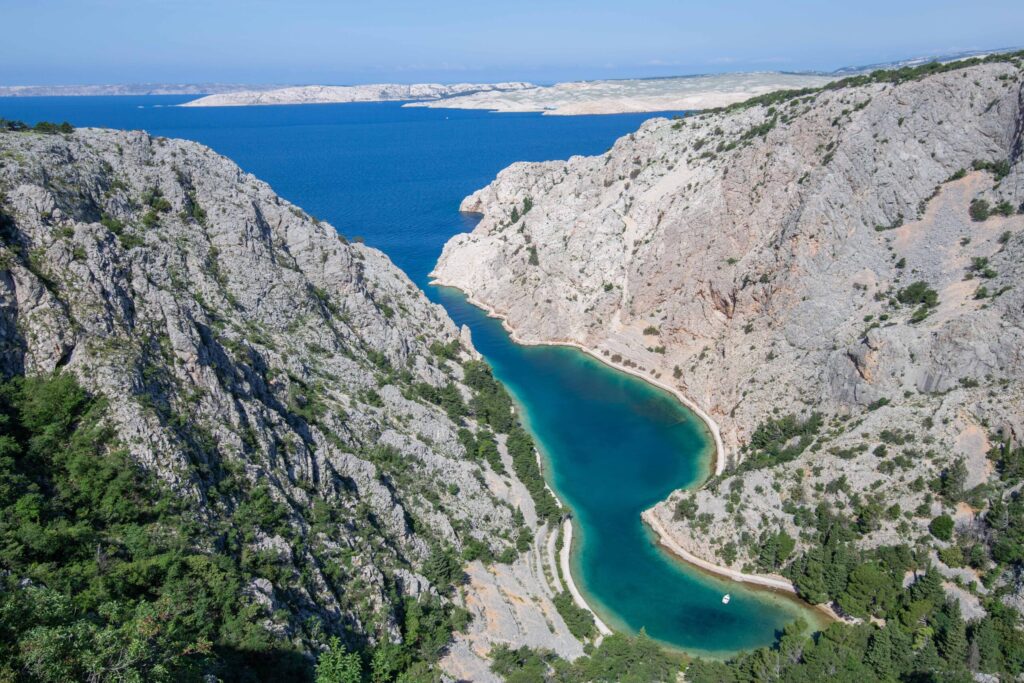
Operating at the intersection between technology and nature, the new collaboration promises to take nature conservation to a new level. The information panels are part of a goal shared by SeaCras and the Rewilding Velebit Foundation – to provide the public with a tool to understand the importance of nature conservation, offer transparent information about marine conditions, and encourage regenerative tourism.
This initiative shows that Croatia, by leveraging smart technologies that intersect with the field of nature conservation, can be a role model for sustainable marine management – starting today.
